Ruud hot water cylinders in NZ: why we replace them with Rheem
Ruud gas cylinders were installed in tens of thousands of Kiwi homes from the 90s. Here's why parts are now costing more than a full swap to a modern Rheem Stellar.
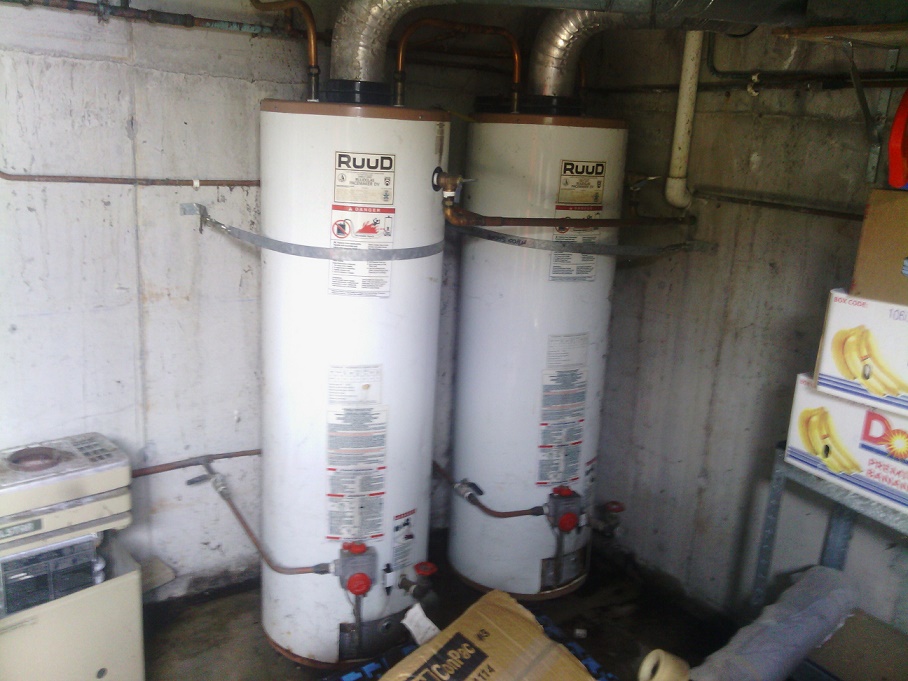
A quick history of Ruud in New Zealand
Ruud is one of the oldest names in hot water, the original Ruud tank heater was patented in the United States back in 1897. The brand landed in New Zealand in a serious way through the 1990s under the Rheem group (Rheem owns Ruud globally), and Ruudglas Pacemaker gas cylinders became a default spec on thousands of new Auckland homes right through to the mid-2000s.
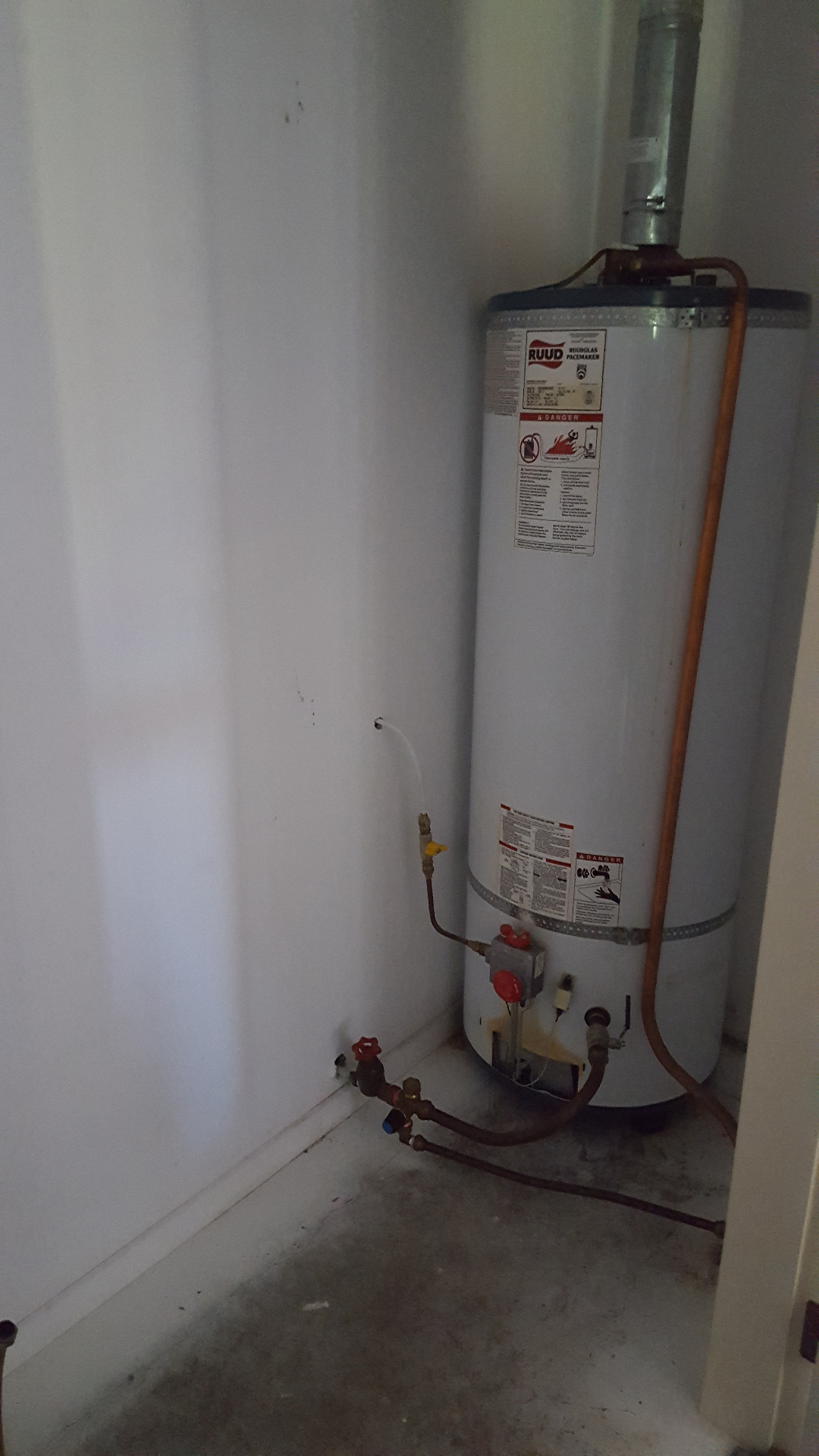
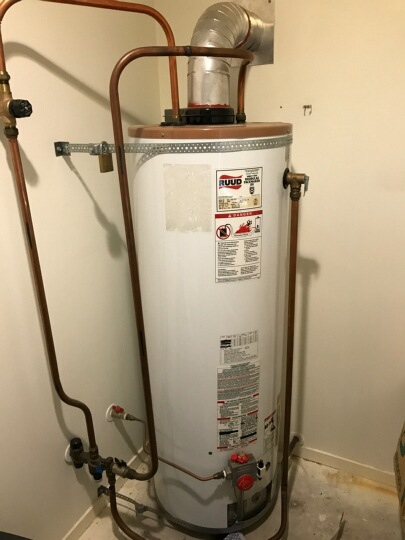
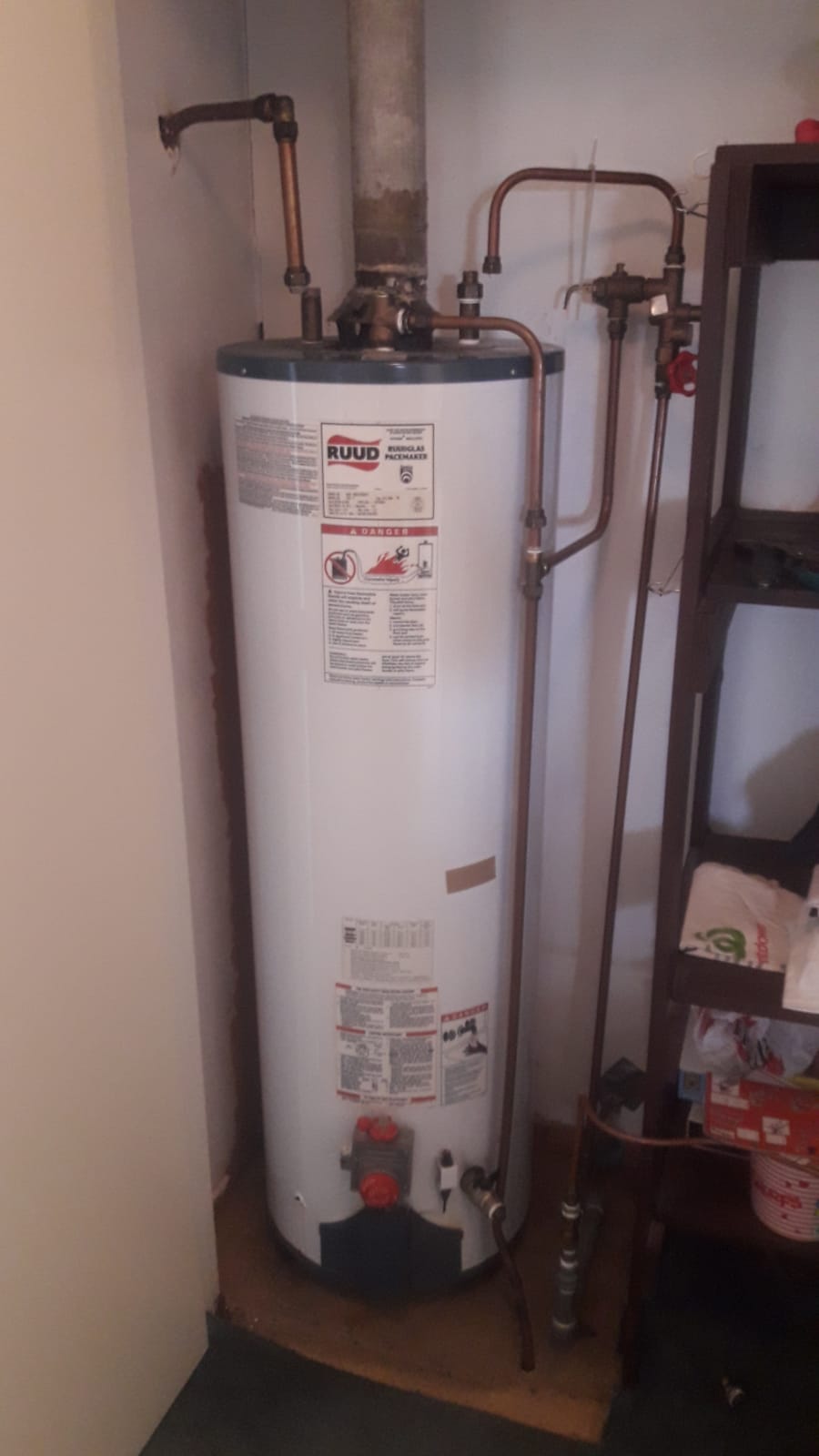
Industry estimates put the number of Ruud and Rheem gas cylinders still running in NZ homes in the tens of thousands. If your cylinder is a white tank with a red-and-white RUUD sticker, a brass gas control valve at the bottom and a galvanised flue out the top, you're looking at one of them.
Why we're seeing so many fail right now
A gas cylinder's lifespan is usually 10 to 15 years. The bulk of Ruud Pacemakers installed between 1998 and 2010 are now well past that window, and we're pulling several out every week around Auckland.
The failure pattern is almost always the same: the sacrificial anode is long gone, the glass lining inside the steel tank breaks down, and the tank starts to weep from the base or seep around the bottom seam. Once that starts there is no repair, the pressure vessel itself is compromised.
Other common Ruud faults we see: pilot light won't stay lit (thermocouple or gas control valve), sooty burner and yellow flames (blocked burner or flue), banging and kettling (heavy sediment), and rusty hot water at the taps (internal corrosion).
Why parts now cost more than a new cylinder
Ruudglas Pacemaker parts are increasingly hard to source in NZ. Gas control valves, thermocouples and burner assemblies for the older models are either obsolete or have to be brought in on special order, and prices have climbed steeply over the last few years.
A typical repair bill on a 15-year-old Ruud in 2026 looks something like: gas control valve $650, $900, thermocouple and pilot assembly $250, $400, plus 2, 3 hours of labour and a callout. You can easily spend $1,200, $1,500 on a cylinder that still has a corroded tank and no warranty left on it.
A brand-new Rheem Stellar 130 or 180 supplied and installed in a like-for-like swap sits in a similar ballpark for many homes, and you get a fresh 10-year cylinder warranty, better efficiency, and no risk of the tank letting go six months later.
Why we recommend Rheem Stellar as the replacement
Rheem is the parent company of Ruud, so the swap is genuinely like-for-like, same manufacturer lineage, same NZ support network, and modern parts availability for the next 15 years.
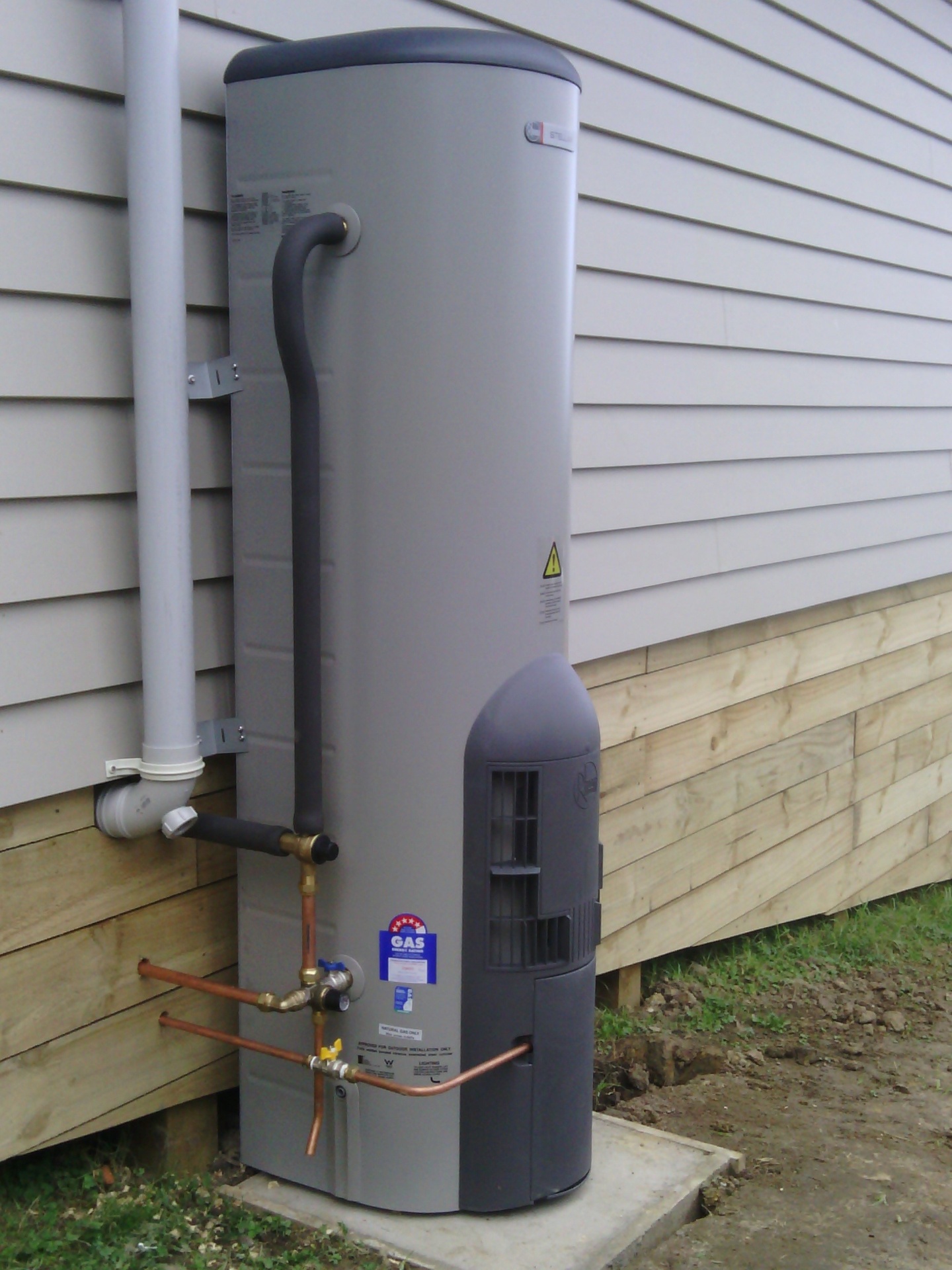
The current Rheem Stellar range is designed for outdoor NZ installs, has a 5-star gas rating, a much more efficient burner than the old Pacemakers, and a cleaner powered flue design. It's also physically smaller in most sizes, which helps when the old tank was jammed into a tight cupboard or laundry corner.
For homes that want to move away from a cylinder entirely, a Rinnai Infinity continuous flow is often the better answer, no standing losses and no tank to fail. We'll walk you through both options before quoting.
What a Ruud-to-Rheem swap actually involves
Isolate gas and water, drain the old tank, disconnect the flue and pipework, and remove the Ruud (usually 200kg-plus with water still in the base, this is not a DIY job).
Set the new Rheem Stellar on a fresh base, re-route the copper hot and cold, fit a new tempering valve to comply with current standards (50°C at the tap), reconnect gas with a new isolation valve, terminate the flue to the updated clearance rules, and pressure-test.
Commission, check combustion, and issue a Gas Safety Certificate. Most straightforward swaps are done in a single day.
Signs your Ruud is on borrowed time
Any moisture, rust staining or dripping around the base of the tank. Rusty or discoloured hot water at the taps. Loud banging when the burner fires. Pilot light that keeps going out. Yellow flames or soot marks around the burner cover. Any Ruudglas Pacemaker over 12 years old, even if it's running fine today.
If you're seeing any of these, get in touch before it fails on a Sunday night. A planned Ruud-to-Rheem swap on a weekday is a lot cheaper and less stressful than an emergency replacement with a flooded laundry.